Composer Biographies
Read below to learn more about the three composers featured in this year’s School and Family Concerts.
MODEST MUSSORGSKY
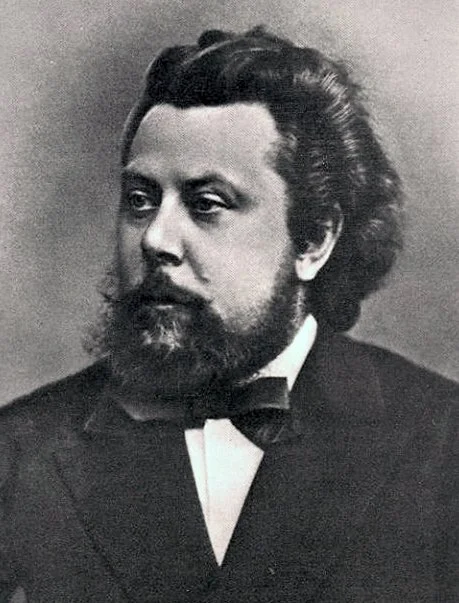
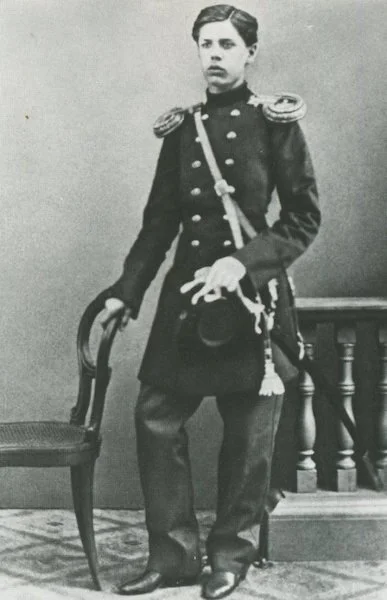
Modest Mussorgsky (Ma-dest Muh-soreg-ski) strove to create a uniquely Russian style of music. He was born into a wealthy family and began piano lessons at age six. He later attended military school and was commissioned after graduation. While attending school he continued taking music lessons. Shortly after graduation, Mussorgsky met several composers who would become influential friends. In 1858, Mussorgsky resigned his military commission in order to compose full-time, taking a government job to pay the bills. Although he wrote he loved “everything Russian,’ his early works were more influenced by Western conventions. In 1863 he changed styles, writing in a more realistic style and carefully setting Russian texts to music. Mussorgsky became friends with members of “The Five” (a group of composers who wrote specifically Russian music) and began work on his opera, Boris Godunov. Mussorgsky suffered from ill health due to alcoholism and died when he was only forty-two. Although he wrote only a few works, his pieces are colorful evocations of Russian legends and history and feature dramatic, careful setting of the Russian text.
Mussorgsky completed his piece, Saint John’s Eve on Bald Mountain in June 1867. This “musical picture” was based on a short story by Nikolai Gogol. The celebration of Saint John the Baptist usually happens near the summer solstice, the shortest night of the year. Traditionally people would have bonfires to keep evil spirits away. In many Slavic countries (like Russia), this event became kind of like a Halloween party with ghosts and witches celebrating on this short night, usually near a big mountain. Mussorgsky was really happy with his composition, now renamed Night on Bald Mountain. The music is wild and sometimes scary sounding, with fast notes and shrieking sounds in the orchestra. Near the end chimes ring, leading to a quieter ending as the party is over for another year. However the piece, was never performed during Mussorgsky’s lifetime. Nikolai Rimsky-Korsakov, a friend and fellow composer, published a version called a “fantasy for orchestra.” It contains much of Mussorgsky’s original music, with additional sections by Rimsky-Korsakov. This version is the most often performed and is the one you will hear as we visit this wild party for spooks and goblins of all ages.
WHAT TO LISTEN FOR:
• String tremolos with quick passages from the winds, followed by driving brass
• Repeated figures that move throughout the orchestra
• Staggered entrances that build sound and tension
• Sudden silences and quickly speeding notes
• Chimes introduce a contrasting, delicate ending with wind solos and harp
EDVARD GRIEG
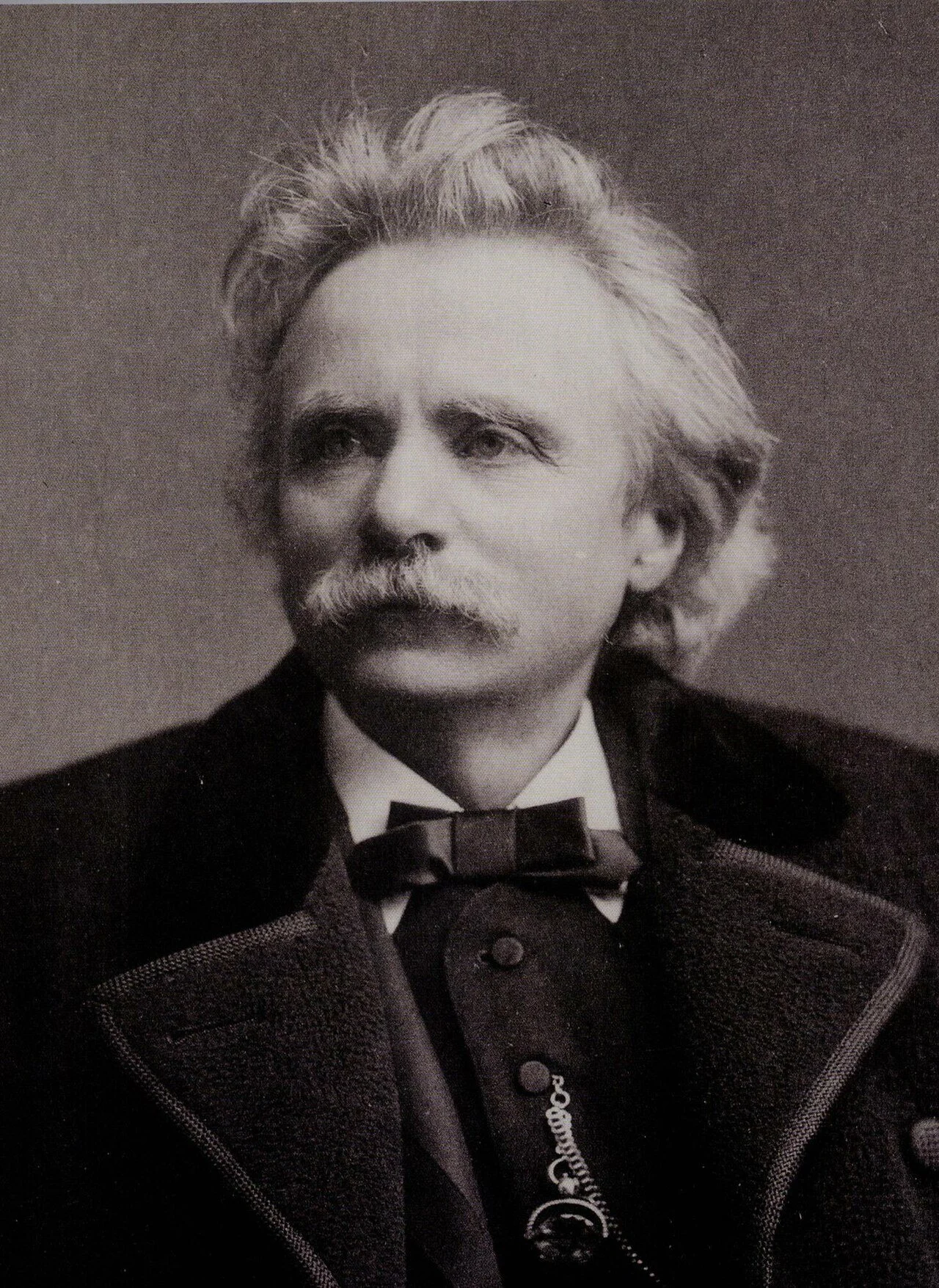
Edvard Grieg (Ed-vard Gree-guh) was born in Bergen, Norway in 1843. His mother was a music teacher and began teaching him piano lessons at age six. At fifteen, Grieg moved to Leipzig, Germany to study piano and organ at the conservatory. He enjoyed attending concerts but found the school too strict. He made his debut as a concert pianist in 1861 and finished his education the following year. He moved to Copenhagen, Denmark in 1863, where he lived for three years before returning to Norway. Grieg wrote his first major composition, Piano Concerto in A minor, in 1868. That year, he was given a grant from the Norwegian Ministry of Education, largely due to the testimonial of composer Franz Liszt, even though the two had never met. They did meet in Rome in 1870 and 1871. While trying to come up with a plan about how to write an opera with a friend, Grieg worked on another project, the incidental music for Henrik Ibsen’s play Peer Gynt, which includes “In the Hall of the Mountain King.”. Over the next few years, Grieg served as an orchestra conductor, travelled widely, and recorded his music on vinyl records and for player pianos. When he retired in 1903, the Norwegian government provided him a pension. He died in 1907 after a long illness.
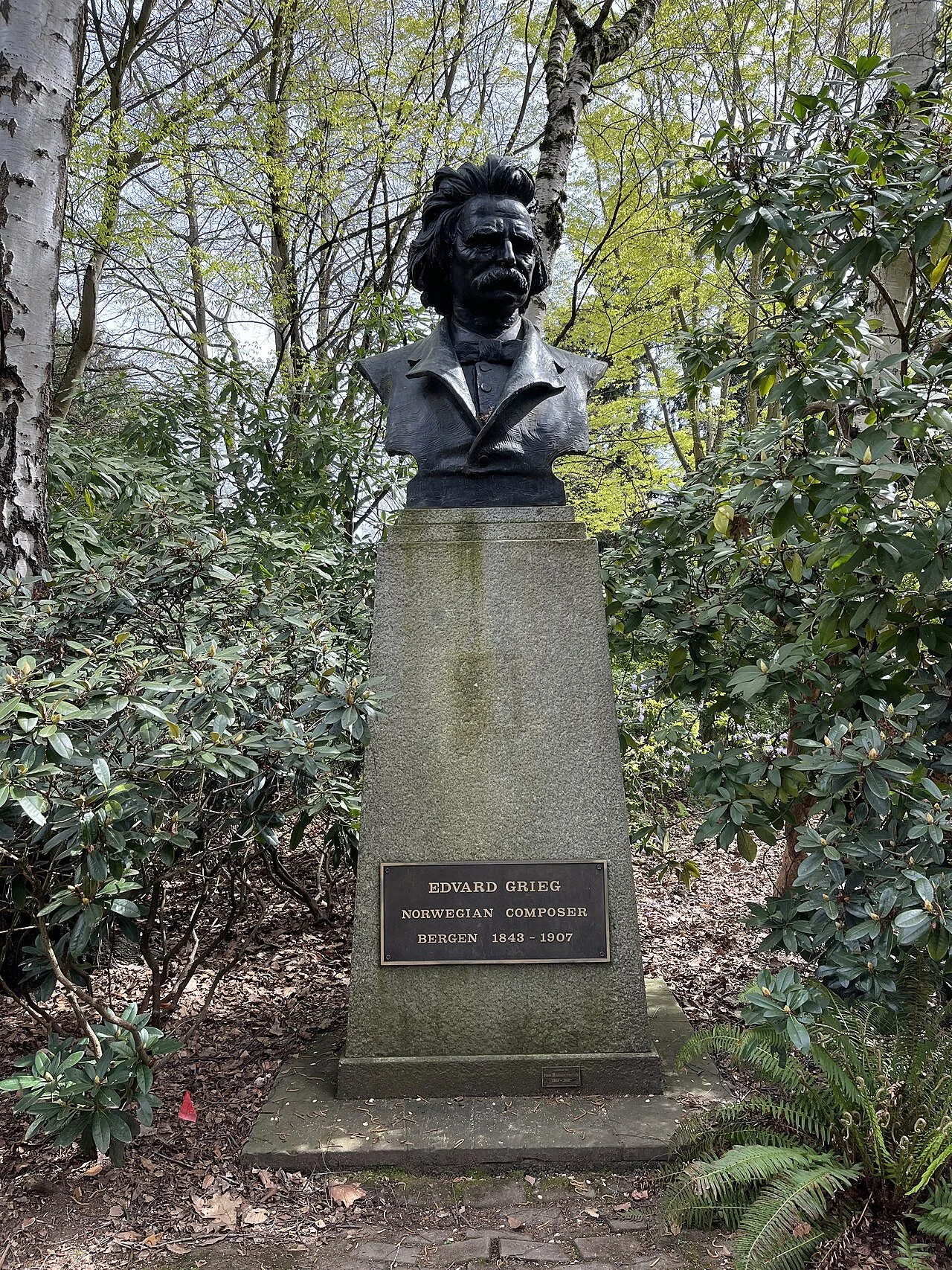
Norwegian playwright Henrik Ibsen wrote Peer Gynt in 1867. The five-act play follows Peer Gynt as he travels from the Norwegian mountains to North Africa and back. Ibsen asked Grieg to write music to go along with the play. Grieg wrote ninety minutes of music, some with vocal parts, which were used in the performances. Later, Grieg created two suites, each with four pieces, that could be performed in concert settings. In Act 2 of the play, Peer Gynt had bumped his head on a rock and dreams that he’s in a mountain kingdom inhabited by trolls. He enters a large hall, filled with trolls, goblins, and gnomes, ruled by the Mountain King, Dovregubbens. The troll Mountain King and Peer have a discussion about Peer’s guiding principal, “to thyself be...enough.” The king offers Peer the opportunity to become a troll, if he marries the king’s daughter. However, Peer decides the troll life isn’t for him and tries to flee the hall. Although it is one of Grieg’s most famous pieces, he didn’t like it because he thought it was too obvious. However, he did realize it’s popularity and included it in his orchestral suites.
WHAT TO LISTEN FOR:
• Only lower instruments introducing the main melody
• Other instruments add in and the tempo gradually increases
• Very fast and loud at the end
• Big chords with quick notes and a dramatic ending
https://www.imdb.com/name/nm6388394/mediaviewer/rm4072101632/?ref_=nm_ov_ph
CAROLINE SHAW
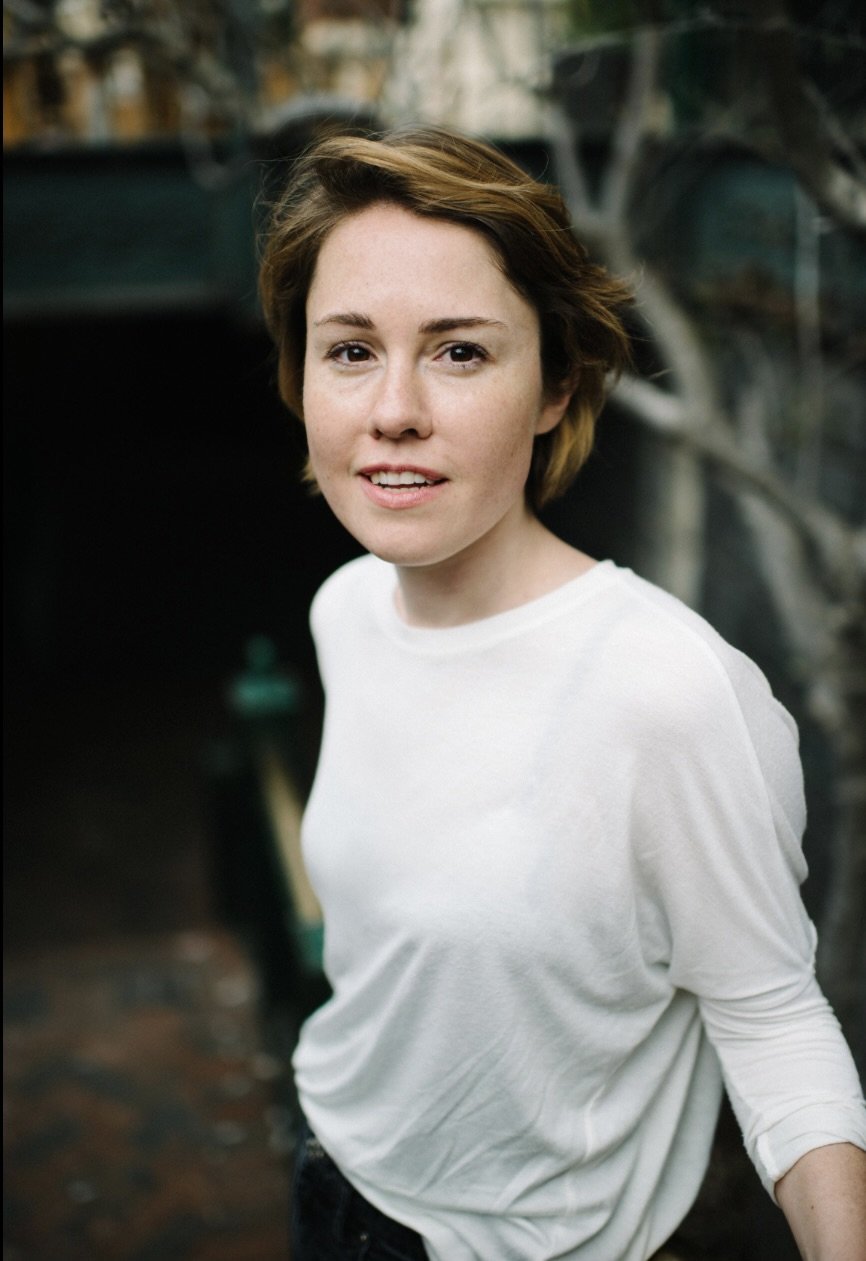
Caroline Shaw was born in Greenville, North Carolina. She began violin lessons with her mother, a singer and violinist, at age two. She heard a lot of music at her Episcopal church where she enjoyed listening to the choir and the organist. As a child, she would call in requests to the local classical radio station and then recording them on cassette tape so she could hear them again. Shaw began writing her own music around age ten, mostly chamber works influenced by Mozart and Brahms. She attended school to become an orchestral violinist or chamber musician, earning a bachelor’s degree at Rice University and a master’s degree at Yale University. In 2012, Shaw won the Pulitzer Prize for her work Partita for 8 Voices, becoming the youngest recipient of the music award. Shaw performs as a violinist with the American Contemporary Music Ensemble and as a vocalist with Roomful of Teeth. Shaw has written music for movies and television. She has worked as a producer for The National, Richard Reed Parry (Arcade Fire), and Nas. Shaw was a co-producer and provided vocals for Kanye West’s “Say You Will.” Shaw says she is “a musician who moves among roles, genres, and mediums, trying to imagine a world of sound that has never been heard before but has always existed.”


.jpg)

https://yale2022.yale.edu/honorary-degrees/caroline-shaw
Caroline Shaw was commissioned to write a piece for Carnegie Hall based on a children’s book. When she was trying to find suggestions, she asked her followers on social media. Someone suggested the book The Mountain that Loved a Bird by Alice McLerran. Shaw reached out to McLerran, who was initially hesitant to allow her book to be used. Over the course of several lengthy phone conversations and visits together, McLerran agreed to let Shaw set the book to music. The work was premiered in 2017 in a concert that featured musical settings of children’s tales, including The Dot and the Line: A Romance in Lower Mathematics and Peter and the Wolf. The Mountain that Loved a Bird tells the story of a bird named Joy and a remote desert mountain who become friends. It is a tale of the transformative power of love and nature. Shaw’s dedication for the work says, “For all young, old, and future Joys and Mountains. Take good care of each other.”
WHAT TO LISTEN FOR:
• Repeated xylophone note followed by warm, lush music, then the piccolo as Joy the bird
• Repetition of melodic themes with small variations and the use of silences
• Joy’s song introduced by the flute then played by the rest of orchestra
• Middle section featuring percussion and somewhat unsettled music
Melodies grow and build before a quiet, peaceful ending
Want to hear more? Check out this PDF of other pieces to listen to by the composers featured on this year’s concert!